


INDUSTRY bodies have failed to respond with foresight and flexibility to threats against the live sheep export trade, according to Episode 3, which argues the trade's collapse has been shaped by both external pressures and internal failures. In a report published this week, Episode 3 analyst, Matt Dalgleish, said while regulatory and social forces certainly played a major role, the industry's response hastened its downfall.
While acknowledging the once robust and highly profitable trade had become increasingly constrained by shifting market dynamics, policy interventions and growing animal welfare concerns, Dalgleish argued the Australian Livestock Exporters Council (ALEC) and "its supporters" ignored structural headwinds and left the sector dangerously exposed.
"The failure of broader peak bodies to assert themselves and develop alternative strategies has only deepened the sense of missed opportunity," Dalgleish said.
"As the trade enters its final years, the sector faces not only the loss of a market but also the potential erosion of public trust in the institutions meant to represent it."
THE DECLINE OF LIVE SHEEP EXPORTS
Live sheep export numbers have been declining for some time, with the Australian Bureau of Agricultural and Resource Economics and Sciences (ABARES) trade dashboard indicating just 425,699 live sheep were exported by sea to May last financial year. This is the lowest number in the trade's history based on the data, sourced from the Australian Bureau of Statistics (ABS), which dates back to the 1988-89 financial year.
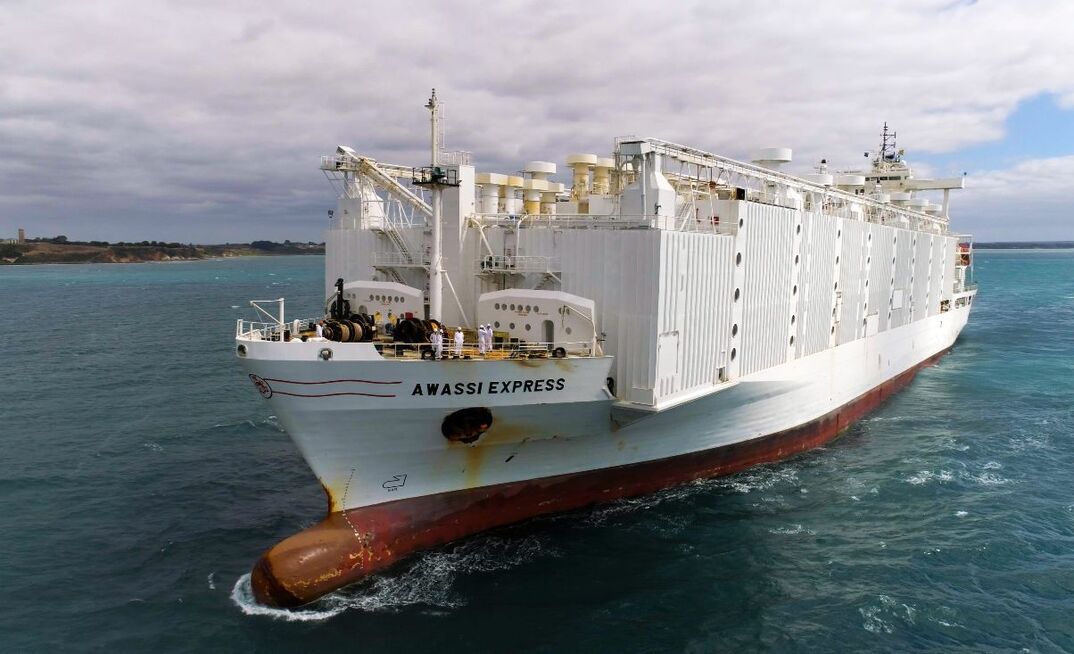
As reported by Kondinin Group last year, the live sheep trade peaked in 2001-02, with 6.53 million live sheep were exported from Australia. As outlined in "How WA sheep producers became sacrificial lambs", there was a considerable drop in the numbers following the release of the Awassi Express footage, from 1.98 million head in 2017-18 (1.94m by sea) to 925,000 in 2018-19 (888,384 by sea). This incident kicked off a chain of events, including the northern hemisphere summer moratorium.
Like Kondinin Group, Dalgleish said the tipping point for the modern phase of decline arguably began in 2018, following the Awassi Express incident.
"That episode, in which whistle blower footage exposed horrific conditions aboard a live export vessel, generated public outrage and brought the issue of animal welfare in the live trade into sharp national focus," Dalgleish said.
"The fallout from this event led to a range of regulatory changes and the introduction of a voluntary industry-led moratorium on shipping during the northern summer."
These measures were framed as reform efforts, according to Dalgleish, and eventually became a mandated closure by the Coalition government. But he said the changes also had the effect of depressing volumes and disrupting the industry.
INDUSTRY RESPONSE TO THE LIVE SHEEP EXPORT PHASE OUT
Despite these signals and the broader societal shift against live animal exports, Dalgleish argued ALEC "appeared to pursue a strategy almost entirely dependent on the prospect of a future change in government to reverse the policy direction."
"The Labor government's commitment to phasing out live sheep exports by sea by mid-2028 was met not with a diversified or adaptive response, but with a politically focused campaign, centred around supporting pro live export trade candidates and leaning on grass roots groups like Keep the Sheep to help influence voter behaviours," he said.
"This approach has now been thoroughly defeated. The current government remains firm in its intent, has legislated the phase-out date, and appears unmoved by the industry's campaign.
"With the failure of this strategy, ALEC appears to be left without a viable alternative, and the broader industry has lost valuable time that could have been used to plan for transition."
However, it wasn't only ALEC that failed to respond proactively, according to Dalgleish, who added "serious questions must also be asked of other representative organisations" such as Sheep Producers Australia and the National Farmers' Federation (NFF).
"While ALEC's role was more direct, these broader peak bodies appear to have been largely absent from any meaningful public leadership on the issue," he said.
"Anecdotal discussion with stakeholders suggests a common view that some of these representative organisations failed to proactively engage in transition planning, advocate for alternative market development, or provide support to affected producers.
"The inference is that this reflects a broader malaise in current agricultural advocacy where reactive politics has trumped constructive policy engagement.
At a time when a united and forward-looking response was most needed, the sector seems to have clung to a singular, and ultimately futile, political hope."
VOLATILE AND CONTRACTING MARKETS COMPOUND TRADE WOES
Dalgleish added the volatility and contraction in destination markets has compounded the problems faced by the live export sector.
ABARES trade data shows there were only six live sheep export markets (by sea) last financial year. Furthermore, Kuwait alone accounted for 40.84 per cent of the trade, and along with Jordan and Saudi Arabia, collectively accounted for 78.78 per cent of the market.
Comparatively, at the trade's peak in 2001-02 there were 15 markets importing live sheep by sea from Australia, with the top market (Saudi Arabia) taking 32.12 per cent of the sheep and the top three accounting for 64.6 per cent.
Dalgleish said even within the current narrow field, market shares have fluctuated wildly in recent years.
"Kuwait, the long-standing anchor of the trade, dropped from 42 per cent share in 2023 to 26 per cent in 2024, before rebounding to 40 per cent in 2025," he said
"Jordan jumped from 16 percent in 2023 to 30 percent in 2024, only to fall back to 15 percent a year later.
"Saudi Arabia, which had no recorded trade in 2023 due to a decade long absence of sourcing from Australia, surged to 24 percent in 2024 and then declined to 10 percent in 2025.
"Israel, once a growth destination, completely withdrew from the trade by 2025, citing animal welfare concerns and growing domestic/nearby tensions causing shipping concerns."
Dalgleish said these abrupt shifts in market share reflect both the fragility of demand and the transactional nature of trade agreements in the twilight of the industry.
"Rather than seeing sustained growth in new markets or stable long-term demand from existing ones, Australia's live sheep sector has had to navigate a landscape of short-term purchases, abrupt halts, and unpredictable government interventions," he said.
"With fewer markets and more concentrated exposure to a volatile region, the trade is not only smaller but increasingly precarious."