
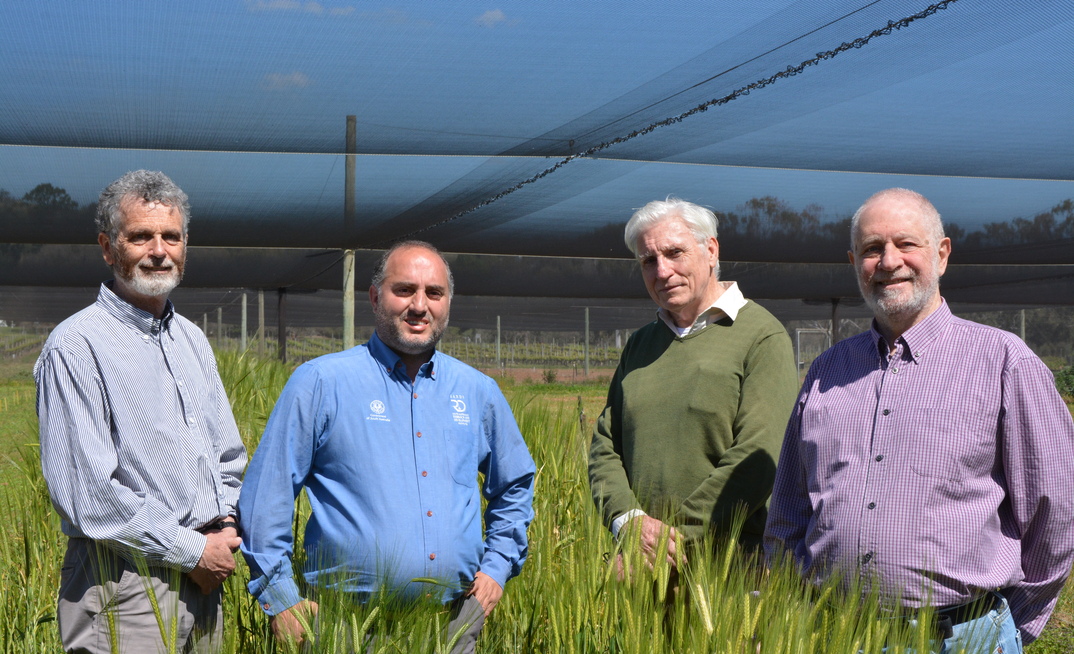


The Water Smart Farming manual, which received investment from the Grains Research and Development Corporation (GRDC) covers a range of topics including how crops use water, plant available water capacity, using technology to improve water use efficiency, and managing risks associated with dryland cropping.
GRDC sustainable cropping systems manager - north, Dr Mark Callow, said maximising water use efficiency is more readily achieved when agronomic decisions are based on recommendations derived from the latest research on maximising rainfall and increasing yield.
"All this great research has led to significant leaps in knowledge. The Water Smart Farming manual collates the latest knowledge into a single document with sub-topics including soil characterisation, agronomic decisions and climate forecasting," Callow said.
The manual was written by industry-leading researchers and agronomists from across Australia, including CSIRO principal research scientist, Dr Kirsten Verburg, and South Australian Research & Development Institute (SARDI) principal scientist of climate applications, Dr Peter Hayman.
Verburg said the manual is a valuable resource for growers and advisers that combines information from one of her research specialties, plant available water, with that of in-season crop water use, and details how management can influence both.
"Often the management strategies for these two topics are presented separately," she said.
"This integrated manual is presented as a series of chapters covering different topics, which growers and advisers can read in order or out of sequence, which is a good approach for a topic as complex and inter-woven as farm water use.
"For example, a grower might start by assessing their soils against locally specific databases in Chapter two, before referring to Chapter three to choose how to pick the best reference site for plant available water characterisation.
"They might then choose to refer to Chapter seven for soil moisture monitoring, before going back to Chapter four to work out how to use the soil water information in their variety selection."
Hayman said combining water use with climate forecasts can help growers make practical agronomic decisions.
"In the past we've often written on risk in farming with a general sense that bad things can happen — a sort of ‘don't run with scissors' type advice," he said.
"In this manual we have looked at risk assessment from a more quantitative perspective and put numbers to risks in order to demonstrate how growers can use seasonal climate forecasts in decision-making, even though the forecast is uncertain.
"For example, we've included a step-by-step example of modelling urea top dressing based on input and grain prices alongside forecasts, to look at the upside opportunity and downside risk of topdressing".
For more information or to download the manual, visit the GRDC website: Water-Smart Farming Manual - GRDC.