


GRDC will invest in the projects over the next five years, in partnership with the New South Wales Department of Primary Industries (NSW DPI) and the Australian National University (ANU), to identify novel STB resistance genes and incorporate them into new Australian wheat varieties.
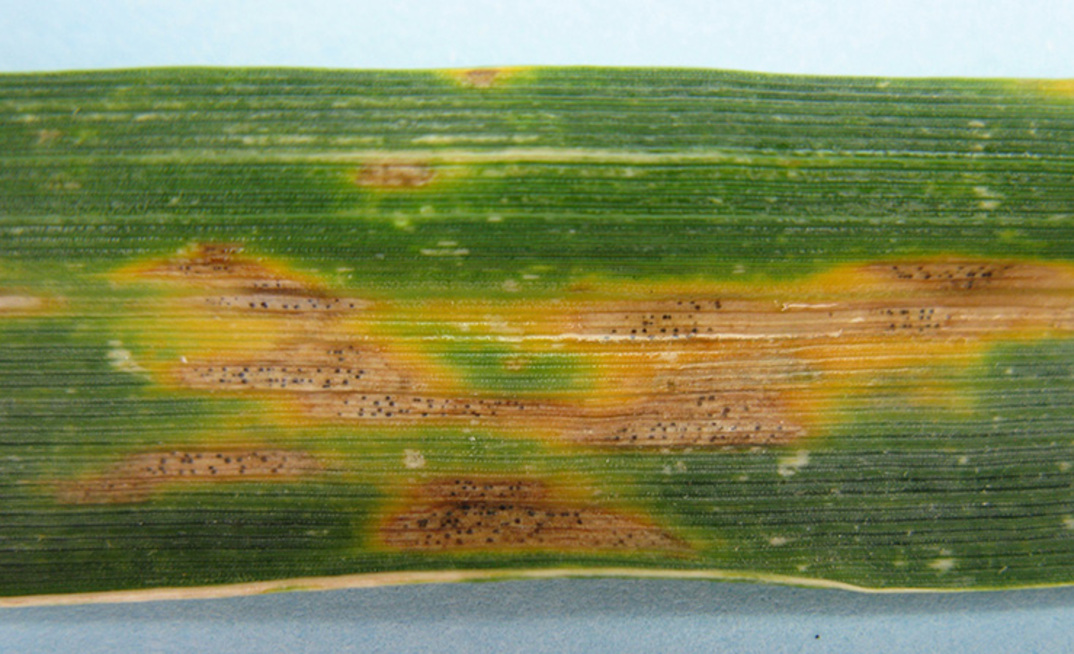
GRDC said STB is a persistent issue for wheat growers in the high and medium rainfall zones of the northern and southern grain growing regions and, if left unmanaged, can reduce yields by up to 50 per cent.
"Traditional control by fungicides is estimated to cost the industry $121 million per year, however resistance to some common fungicides, including triazoles and strobilurin, used to control STB is evolving," it said.
GRDC genetic technologies officer, Prameela Vanambathina, said the investments will approach the problem from three different angles.
"We are seeking to identify novel resistance genes, optimal combinations of adult plant resistance genes and understand plant pathogen interactions," Vanambathina said.
"We hope these three investments will provide tools and knowledge essential to reduce the impact of the disease for Australian grain growers.
"Most wheat varieties are susceptible to STB, leading to increased use of fungicides to control the disease.
"There's a growing fungicide resistance problem, and the identification of new seed sources resistant to Australian pathotypes is crucial."
PROJECT ONE: IDENTIFYING GENES FOR STB RESISTANCE
The first of the three projects aims to discover and transfer novel adult plant resistance genes for STB resistance into wheat breeding programs.
The objectives of the project, which will be led by Dr Andrew Milgate from the NSW DPI, include identifying and characterising novel sources of adult plant resistance from international and Australian germplasm pools, validating these genes, and transferring the genetic potential into elite Australian wheat lines.
"Previous GRDC investment with NSW DPI and ANU has already identified genes that can contribute to adult plant resistance to STB," Vanambathina said.
PROJECT TWO: TESTING GENE COMBINATIONS FOR STB RESISTANCE
The second project will focus on testing optimal combinations of these genes to identify the best ones, and a smaller number of genes for stable adult plant resistance.
Dr Milgate said the partnership will see different combinations of resistance genes, previously identified by NSW DPI researchers in Wagga Wagga, to be bred into wheat varieties. Combining these high-quality genes provides added and more stable protection, and ensures the genes continue to be effective against STB, which can evolve new virulence rapidly.
"For breeders to efficiently use the resistance genes we also need to provide them with molecular makers that can be used to track the genes in their breeding programs," Milgate said.
He said having these molecular markers make it much faster and more accurate to bred wheat with the desirable resistance genes, which means new wheat with improved STB resistance can be delivered to growers sooner.
PROJECT THREE: UNDERSTANDING THE CAUSE OF STB
The third project will continue a long-standing partnership between GRDC and ANU in tackling diseases that affect the viability and productivity of wheat.
ANU professor, Peter Solomon, said despite the impact STB has on growers, disease and genetic resistance is poorly understood.
"This investment by GRDC will enable us to work with colleagues at Birmingham University in the UK to dissect the interaction between key pathogen proteins responsible for virulence and their corresponding host resistance genes in progressing disease," Solomon said.
"The outcomes will significantly advance our understanding of how the fungus Zymoseptoria tritici causes STB. The data generated will be used to develop an approach for screening disease-resistant cultivars."
More information on the projects can be found on the GRDC investment page.