


ANYONE who has driven around the grain-growing regions of Australia in recent years would have noticed the changing landscape associated with grain storage.
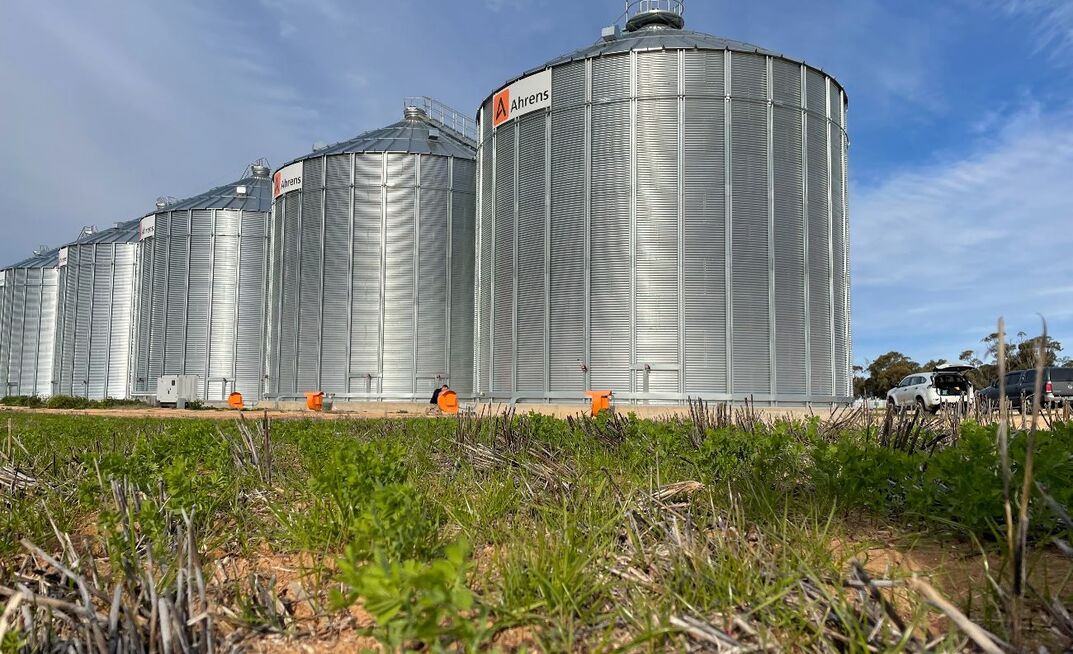
Silos and bunkers have sprung up around farms along with grain bags dotting paddocks and fencelines.
Recent research which involved a survey of Kondinin Group members confirmed the growth in grain storage, and pleasingly, the adoption of best-practice storage techniques. The research was presented recently by Chris Warrick, who leads the Grains Research and Development Corporation (GRDC) Grain Storage extension team.
The survey revealed that the average on-farm storage capacity has grown from 850 tonnes in 2009 to 2450t in 2024.
YOU MIGHT ALSO LIKE
Another tick for the grain growers is the trend of a growing share of gas-tight, sealable storage as a percentage of on-farm storage infrastructure accompanied by a reduction in unsealed silos.
Gas-tight, sealable storage now accounted for about half of all on-farm storages, up from 31 per cent in 2014. Importantly, the proportion of unsealed silos had also declined, dropping from 37 per cent to 17 per cent over the same period.
Warrick said the increased use of gas-tight silos offered several benefits, including more effective insect control and a reduced risk of phosphine resistance.
He noted that this costly resistance was accelerated by fumigating in leaky, unsealed silos. However, despite greater awareness and increased adoption of sealable silos, the survey showed that some suboptimal practices were still being used, contributing to phosphine resistance.
For example, 13 per cent of growers reported using phosphine without sealable storage and while this was an improvement from 35 per cent 10 years ago, this number was still too high.
CLIMATE CHAOS
Efficient and safe grain storage is an on-going challenge but might not be as big as what the climate may dish up.
As this month's edition of the Farming Ahead magazine was going to print, the long-awaited National Climate Risk Assessment (NCRA), created by the Australian Climate Service, was released.
The NCRA is a result compiling data and analysis from experts and scientists at the Bureau of Meteorology, CSIRO, the Australian Bureau of Statistics (ABS) and Geoscience Australia and it's not pleasant reading for farming in Australia.
The report notes that extreme weather events such as floods, cyclones, heatwaves, droughts and bushfires will occur more frequently, more severely, and often at the same time, over the next 25 years.
For those into risk-based approaches, there is a medium confidence the climate risk to primary industries and food will increase to "high-very high" from its current rating of moderate-high. Meanwhile, the climate risk to communities is projected to escalate from moderate to very high-severe, with high confidence.
Mark Saunders