


THE impact of the Victorian fires on farmers and livestock has been significant.
Along with feed, a reliable supply of good quality water is essential for stock retained on affected properties.
Agriculture Victoria says water is critical to avoid health issues, maintain production and meet animal welfare needs and unfortunately in many cases, water tanks, pipes, troughs, and pumps have been destroyed or damaged due to recent fires.
Clem Sturmfels, Land Management extension officer for Agriculture Victoria, said even where infrastructure is still operational, if larger numbers of stock are confined to a small area of the farm, it can result in inadequate water supply.
YOU MIGHT ALSO LIKE
At this time of year beef cattle can consume up to 100 litres per day and sheep up to 10L per day, with lactating animals requiring even more. At these rates, a semi-trailer load of water would be needed every 6-7 days for 50 cattle or 500 sheep.
While meeting daily water demand is essential, requirement, it is equally important to ensure trough flow rates are adequate. Low flow rates can lead to health and welfare problems, increased competition at troughs and damage to water infrastructure or surrounding fencing.
Under normal conditions, livestock should be able to access their full daily water requirement within a four-hour period. This helps manage peak demand, reduce competition, and support dry matter intake.
For 50 cattle or 500 sheep, this equates to a required trough flow rate of 21L/min. In emergency situations, a lower flow rate may be acceptable provided animals can still access enough water and are monitored daily. A typical emergency supply might involve a tank, a 100m length of 50mm polyethylene pipe and a trough. To achieve a flow rate of 21L/min, a minimum 2m head of water would be required.
This could be achieved by maintaining a base volume of 2m of water or by raising the tank up on a mound of well-compacted soil.
Agriculture Victoria says when setting up an emergency water supply, consider:
- raising the tank on a compacted-soil mound to increase trough flow rate
- using appropriate fittings that allow quick and easy tanker connection
- choosing high quality, brand name, pipe and fittings for durability
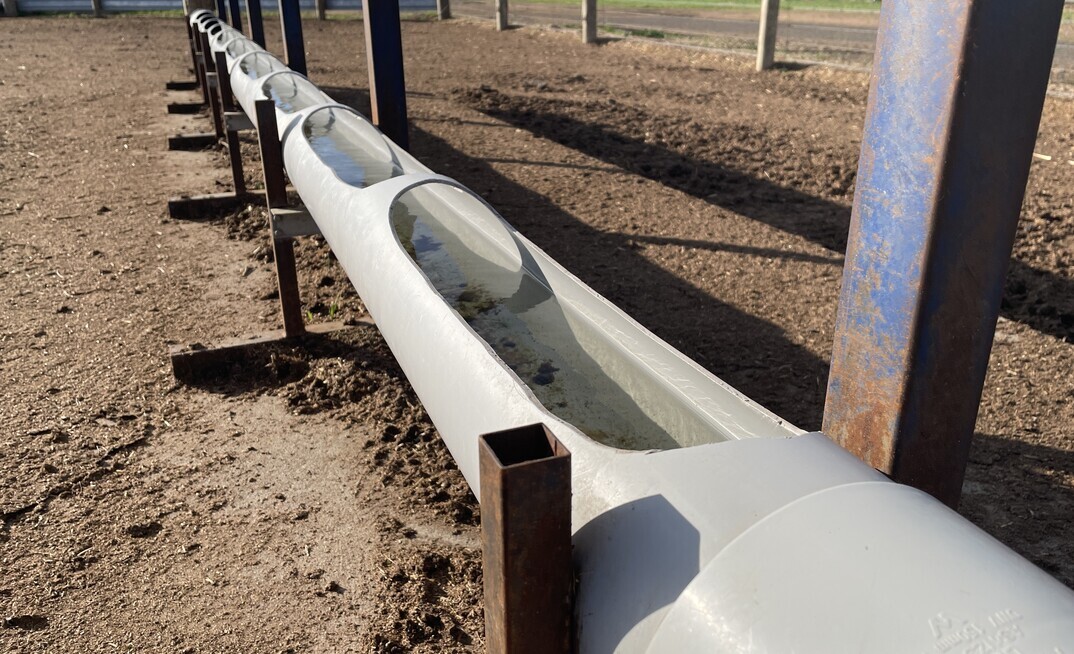
- using a trough designed for easy cleaning
- place troughs to ensure good drainage (on a raised mound for example)
- ensure trough height suits all classes of stock
- ensuring adequate trough length of 4m for stock numbers as described above
- installing tanks, troughs, pipes, and fittings in a way that minimises the risk of stock injury.
For more on fire recovery support and information, visit www.agriculture.vic.gov.au/bushfires or phone 136 186.