
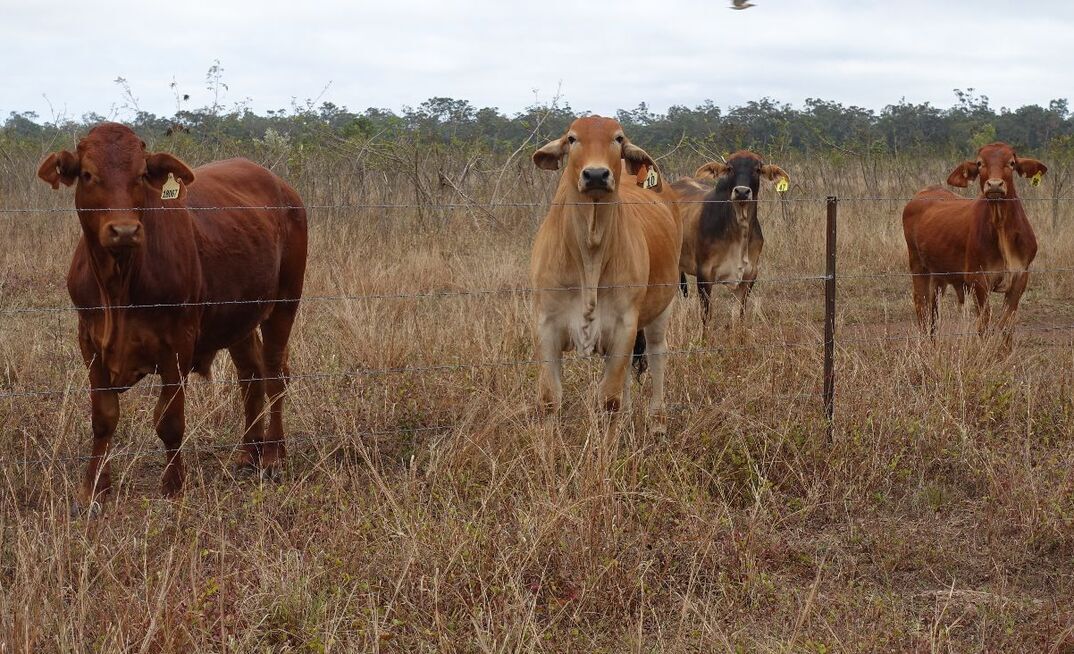


A GLOBAL competition has uncovered the potential of artificial intelligence (AI) to accurately estimate the amount of feed available to livestock under changing conditions.
Australia's national science agency, CSIRO, said pasture measurement had historically relied on manual sampling and field-based assessments, which could be time-consuming, costly and difficult to scale. It said while satellite and other remote sensing approaches have helped broaden pasture monitoring across large areas, high resolution on-ground digital photographs were one approach which could be used to calibrate existing systems, while also revealing new fine-scale features such as species mix and quality.
To this end, CSIRO, in partnership with Google Australia and Meat & Livestock Australia (MLA), launched the global "Kaggle" challenge to test the ability of AI to estimate pasture biomass directly from images.
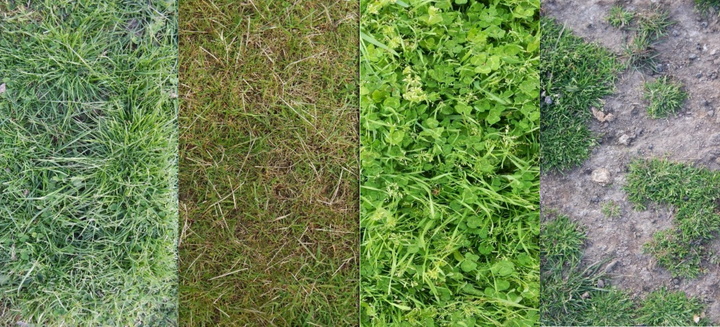
Participants were tasked with training machine learning models to estimate pasture biomass directly from the images, using data collected across different Australian regions, seasons and pasture types.
YOU MIGHT ALSO LIKE
The competition, offering a prize pool of $US75,000, attracted almost 100,000 model submissions from around 14,000 registrations across 109 countries, which CSIRO said highlighted strong global interest in applying specialised data science to real-world agricultural challenges.
COMPETITION RESULTS
Team 卷不动了 from China won first place for its novel approach - treating available feed as a counting problem rather than a simple estimate, enabling models to adapt to new conditions and improve accuracy on unseen data.
The other winners included Team dino series from Vietnam and Team embee from the United States. The Vietnamese team focused on understanding where feed appeared within an image, estimated spatial distribution and used simulated environmental variation to strengthen performance. The US team prioritised robustness by combining multiple models into a single system, which CSIRO said reduced overfitting and delivered more consistent results across a highly variable dataset.
CSIRO said the winning teams demonstrated that advanced models could learn to extract meaningful information from images, such as the amount of plant material, including grass and other vegetation available for livestock to graze, and do so reliably across changing conditions.
It said this approach supported a shift from broad monitoring to targeted, site-specific management that pinpointed exactly where fertiliser or other interventions were needed.
PRACTICAL TOOLS FOR REAL-WORLD FARMING ENVIRONMENTS
CSIRO senior principal research scientist, Dr Dadong Wang, said the results were an important step forward for agricultural research, environmental monitoring and sustainable land management.
"Within a short period, competitors tested a wide range of approaches and refined their models in different ways, leading to major improvements in how accurately feed levels could be predicted across different regions, seasons and pasture conditions," Dr Wang said.
"The winning solutions showed that reliable results can be achieved using relatively small amounts of data, making these tools practical for real-world farming environments where conditions are constantly changing."
Rather than building solutions tailored to individual sites or seasons, CSIRO said the top‑performing teams focused on enabling systems to perform reliably across different environments by recognising patterns in pasture and capturing fine botanical details in the images, such as dying grass or small clover leaves. It said this approach helped ensure predictions remained reliable even as landscapes, weather conditions and pasture composition changed.
SUPPORTING PRODUCERS WITH BETTER INFORMATION
MLA group manager – science and innovation, Michael Lee, said the competition's outcomes highlighted growing opportunities to support producers with better information.
"Accurately understanding how much feed is available and what the feed is comprised of is fundamental to grazing management," Lee said.
"The approaches demonstrated through this competition point to future tools that could reduce reliance on manual measurement and provide producers with faster, richer insights to support day‑to‑day decisions."
CSIRO planned to analyse the winning approaches in detail to inform future research and development, and would continue working with industry partners to explore how the most promising methods could be translated into practical, scalable pasture measurement tools. It said the work has been supported by FrontierSI (formerly the Cooperative Research Centre for Spatial Information).