
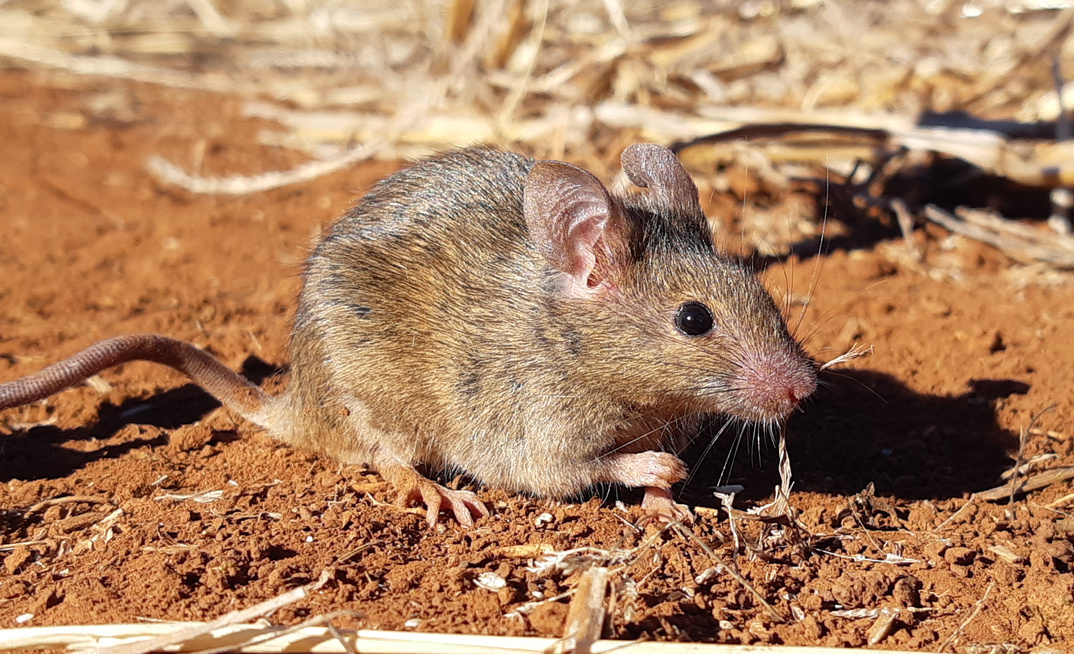


MOUSE activity continues to rise in Western Australia and there are concerns for some regions in South Australia, according to the latest Mouse Forecast.
Issued by the CSIRO and Grains Research and Development Corporation (GRDC), the March Mouse Forecast has relegated the WA regions of Geraldton, the Central Wheatbelt and Esperance to "Prepare to Act at Sowing" status.
In South Australia, the Adelaide Plains and Yorke Peninsula regions are at "Watch and Act at Sowing" status while Queensland is at "Watch".
CSIRO says in WA, it has received concerning reports of very high mouse numbers, suggesting outbreaks could be under way across the Mid West coast around Geraldton, Central Wheatbelt around Merredin, and Esperance region on the south coast.
YOU MIGHT ALSO LIKE
Recent rapid assessment monitoring suggests this likely also extends to the Kwinana West region.
For the Adelaide Plains and Yorke Peninsula, there is strong evidence of moderate to high and increasing population densities from recent survey data. The CSIRO says there is some potential for an outbreak here depending on future conditions.
For northern New South Wales and southern Queensland, there is generally low activity, although moderate activity has been seen across the Goondiwindi and northern Darling Downs regions in Queensland with recent rapid assessment monitoring.
Mouse numbers remain low in Victoria, southern and central west New South Wales.
Management recommendations include:
- Monitor mouse activity by walking through paddocks and searching for active burrows (chew cards could also be used). Two or three active burrows per 100 square metres is cause for concern prior to sowing.
- Where high mouse activity is identified, consider applying mouse bait at seeding to prevent damage to the freshly sown crop. Monitor mouse activity following baiting after application to assess effectiveness of the application. ZnP25 is the only currently registered bait available - use it in accordance with the label instructions and report any adverse effects (including a lack of efficacy) via the Australian Pesticides and Veterinary Medicines Authority website.
- Reduce available mouse food (for example, spilt grain) where possible. High rates of background food directly reduces the effectiveness of poison baiting (as mice are less likely to consume the baits).
Mouse population surveys are conducted two to three times a year at each of the 170 long-term monitoring sites. Mice are surveyed through active burrow searches and chewcards. To calibrate this data against more robust population density measurements, the CSIRO conducts live-trapping at three sites (Adelaide Plains South Australia), Northern Mallee (Victoria) and central western New South Wales.
Mouse monitoring data is collected by CSIRO, NSW Local Land Services, NSW Department of Primary Industries and Rural Development, Central West Farming Services, Birchip Cropping Group, & Farmanco.
The CSIRO also receives reports from farmers, agronomists and other community members.
Mouse sightings (and lack thereof) can be reported here: https://feralscan.org.au/mousealert
The GRDC has plenty of resources for mouse management and these can be found here: https://tinyurl.com/2am6n87m