


A GRAIN storage expert is warning growers to check farm silos well ahead of this year's harvest, following a series of high-risk incidents in southern Australia.
Grains Research and Development Corporation (GRDC) grain storage extension team specialist, Chris Warrick, is urging farmers to assess and either maintain or decommission older silos, following the serious cases involving silos collapsing.
South Australia police reported earlier this month a 63-year-old man from Salt Creek was killed after becoming trapped in a silo. This followed another silo-related incident in 2019, where a farm worker died at Kalanbi, and the collapse of a silo the previous year near Mallala, north of Adelaide, which fortunately resulted in no injuries.
Earlier this year another man suffered significant injuries after being trapped under a silo in Queensland, while in 2020 WorkSafe Queensland issued a safety alert after a transportable grain silo collapsed on a farmer.
YOU MIGHT ALSO LIKE
THE IMPORTANCE OF ASSESSING SILOS
Warrick said while well maintained silos can last over 30 years, growers need to effectively check, assess and recognise when critical storage equipment is no longer fit for purpose or has been structurally compromised.
"The potential risks to family members or farm staff if a silo fails is very serious, there are also implications for grain or other losses, so this is an issue that growers need to pay attention too," he said.
"If a silo is not structurally sound, we strongly encourage growers to seek an alternative storage option, make repairs or decommission the silo to prevent further damage, injury or catastrophic failure of the silo."
Warrick said storing pulses and fertilisers can be higher risk than cereal grains, with higher bulk density and different flow characteristics placing greater loads on silos. This can cause them to fail if structural weak points are apparent due to design, materials, corrosion, damage or modifications.
"These commodities require stronger wall sheets and/or wall supports, and stronger cone bases than for cereal grains," he said.
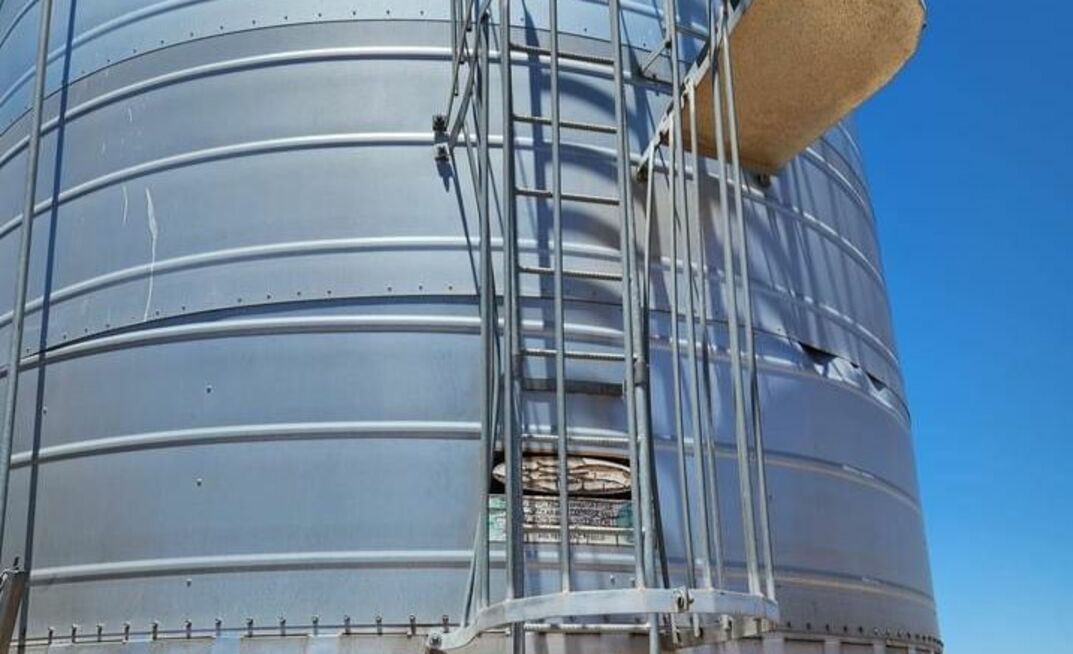
"Cracked concrete bases, unlevel bases, damaged silo legs or wall sheets, corroded rivets or bolts are known contributors to silos failing under load."
SILO INTEGRITY CHECKLIST
For growers assessing silo integrity, Warrick recommends questions in the checklist include:
- Is the foundation the silo is sitting on stable?
- Are the support legs and base rings free of damage and rust and in sound condition?
- Are the wall sheets free of damage and rust?
- Are all fixings (rivets and bolts) in sound condition?
- Is the ladder structure (if applicable) in sound condition for safe use?
- Does cleaning and operating the silo pose a safety risk?
GRDC grower relations manager – North, Graeme Sandral, added growers should take extra care when out loading fertilisers, since they absorb more moisture than stored grain.
"Growers should be aware that the northern and western sides of silos often have lower moisture, with higher moisture in the southern side of the silo," he said.
"This can present risks when out loading with the dry side generally emptying first in the worst-case scenario this can lead to silo collapse."
CONSIDERING SAFE OPERATION
In addition to structural integrity, Warrick encouraged growers to consider safe operation as part of the assessment.
"Whether it be for maintenance or monitoring grain, access to the top of silos is necessary so safe access is a requirement," he said.
"Many older silos have unsafe ladders, some silos have been purchased without ladders, so the decision is to install safe ladders or an elevated walkway or use a mobile boom lift.
"Silos being fit for purpose includes a safe way to access the top."
Warrick encouraged growers to write a maintenance or decommission plan for silos immediately following loading or out loading, when any issues are at front of mind.
"The decision to maintain or replace silos is critical for safe farming operations and needs to happen well in advance of harvest," he said.
MORE INFORMATION
GRDC has information resources available via storedgrain.com.au with the national team of grain storage specialists available by phoning 1800 WEEVIL.