
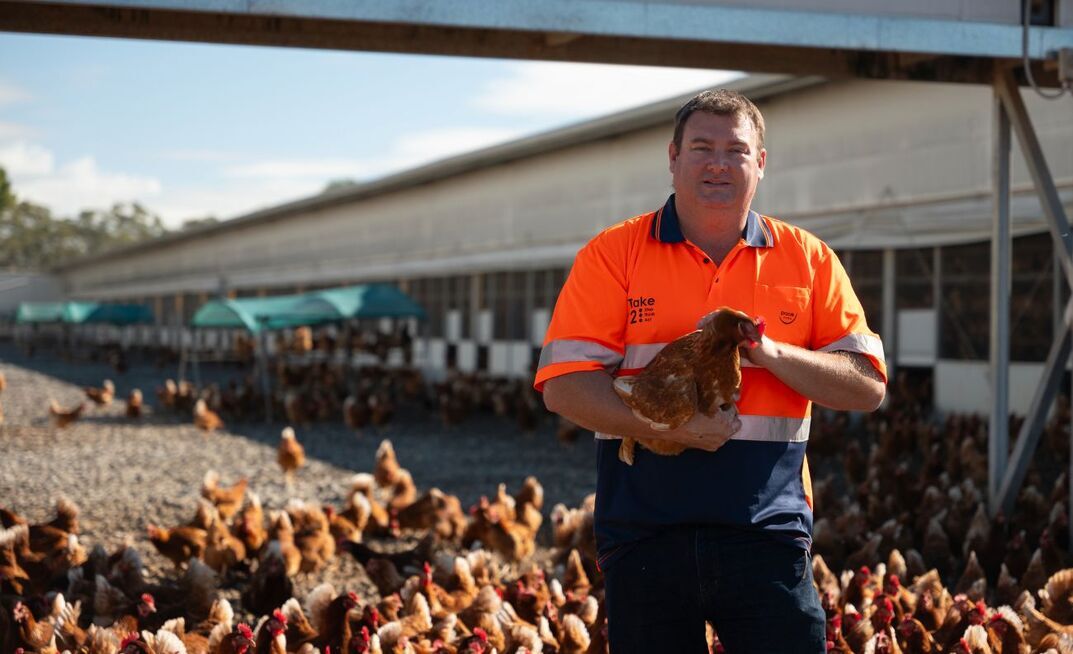


FARMSAFE Australia's National Farm Safety Week kicked off on Sunday, with six ambassadors from across Australia set to share their own experiences and practical insights into creating stronger safety cultures.
The campaign will run from 19 to 25 July, covering topics such as near misses, complacency, child safety and the culture of "pushing through."
Poultry operations manager, Brad Vinecombe, was the first safety ambassador to share his experience, today urging producers to stop and reassess before pushing on.
After experiencing what he described as a near miss on a poultry farm that "could have been a death," the New South Wales producer recalled how he began questioning many of the behaviours he had accepted throughout his career and the examples he wanted to set for the next generation.
YOU MIGHT ALSO LIKE
"It was just a standard day on the farm, but afterwards I realised I'd taken safety for granted. It made me completely reassess the way I approach every job," he said.
Managing millions of chickens across large-scale poultry operations, Vinecombe said he understands the pressures that come with modern farming, but experience has taught him that no deadline is worth compromising safety.
"Sometimes the safest decision is simply to stop and reassess. Slowing down doesn't mean you're falling behind. More often than not, it's what gets everyone home safely," he said.
Growing up in agriculture, Vinecombe admitted many of the behaviours he witnessed were simply accepted as part of farming life. But today, with a young family of his own, Vinecombe believes it is time to break that cycle.
"I grew up seeing people push through fatigue, rush jobs and just get on with it because that's what farmers did," he said.
"Now I've got a young family waiting for me at home, I see things differently.
"I can't change the examples I grew up with, but I can choose the example I set now."
For Vinecombe, that change in perspective reinforced one lesson above all else - the standards farmers demonstrated every day influenced everyone around them.
"What you do every day sets the standard," he said.
Vinecombe believes some of the greatest risks on Australian farms weren't always the obvious ones, with risks hidden in routine environments.
"That's when complacency starts to creep in," he said.
"Good operators reassess conditions constantly because every day is different."
He also believes younger workers have an important role to play in creating safer farms.
"We need experienced people setting the right example, but we also need younger workers to speak up if something doesn't look right," he said.
"Safety should never be something you're afraid to question."
A SHIFT ACROSS AGRICULTURE
Farmsafe Australia chair, Felicity Richards, said Vinecombe's story highlighted an important shift taking place across Australian agriculture.
"Many of the safety habits people learn on farms are passed from one generation to the next," Richards said.
"The opportunity we have today is to make sure we're passing on the right ones.
"Taking a moment to reassess, speaking up when something doesn't feel right and choosing the safer option aren't signs of slowing down. They're signs of strong leadership.
"The example we set today shapes the standards the next generation will accept tomorrow."
Queensland bull handler Sophie Halliday, Tasmanian sheep producer Josie Chester, Cotton grower Gavin Dal Broi, New South Wales cattle producer Katie Saul and South Australian cattle grazier Robbie Davis will share their insights throughout the rest of the week.
Richards said together the ambassadors demonstrated safer farms were built through thousands of everyday decisions.
"Culture isn't built through posters or paperwork alone. It's built through what people see; a helmet worn, a seatbelt buckled, a decision to stop and reassess, a conversation about fatigue or someone having the confidence to speak up," she said.
"This National Farm Safety Week, we're asking every person in agriculture to think about the example they're setting. Because the way we work today shapes the culture we'll leave for tomorrow."