

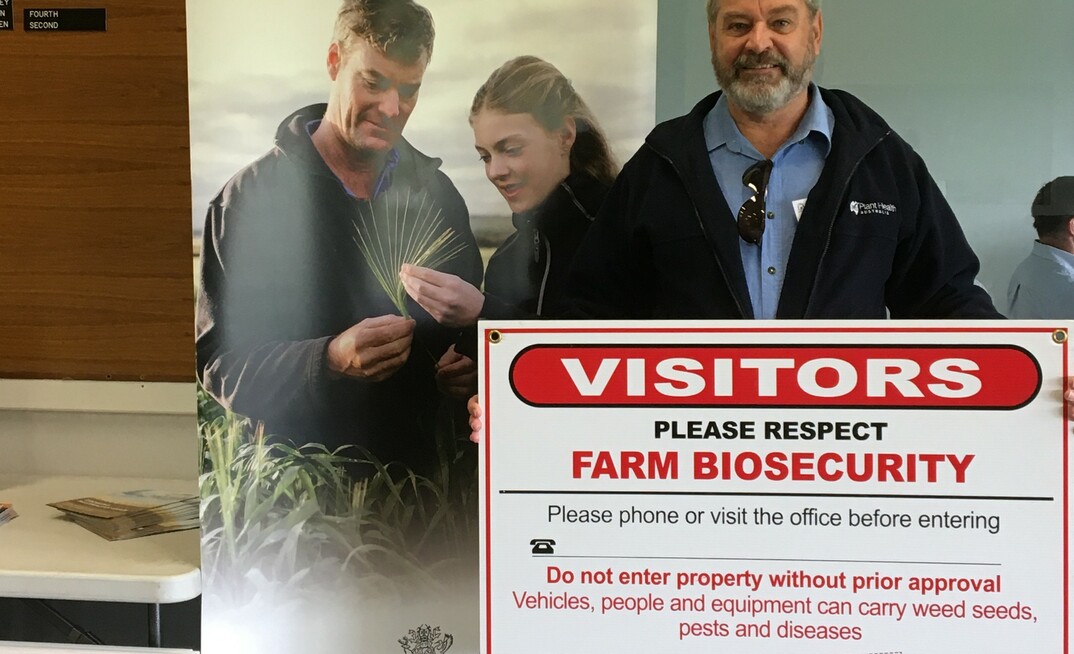


Primary producers in Western Australia have been encouraged to install or replace property biosecurity signs to help protect their businesses from the risk of potentially devastating pests and diseases.
There has been a significant increase in the adoption of farm biosecurity signs in recent years, driven by increased awareness as a result of the global pandemic and emergency animal disease threats.
Landholders can have a commercial signwriter make up signs or craft their own, using at template available on the Farm Biosecurity website. Grain growers can also download a similar template from the Plant Health Australia website.
Free, ready-made signs for grain growers are also available from the Department of Primary Industries and Regional Development's (DPIRD's) Northam office.
Western Australian Grains Biosecurity officer, Jeff Russell, said it was a good time to do an audit of signs, before the growing season commenced.
"These signs have a temporary life span and depending on exposure to the weather, especially the sun and wind, many are reaching the end of their useful life," he said.
"While it is more costly to get a sign made up by a signwriter, growers can view this as a long-term investment for their farm business.
"If a group of growers place a bulk order for permanent signs the price per sign is reduced by sharing the set up cost, making even more economic sense."
Russell said farm signs were a simple but effective tool to manage on-farm biosecurity risks.
"Farm signs to direct property entries are a first line of defence tool to mitigate pest and disease threats for all primary producers," he said.
"Adopting a ‘Come clean, Go clean' philosophy for machinery, livestock, product and people movements on properties is a powerful step to protect businesses.
"Having a clearly marked parking area and clean down areas to ensure all vehicles and machinery are clean before entering production areas is another useful practice."
For more property biosecurity information and advice visit www.farmbiosecurity.com.au