


IT feels like just months ago I was waiting on the side of a dirt road for a friend and neighbour to deliver her last long-life carton of lactose-free milk.
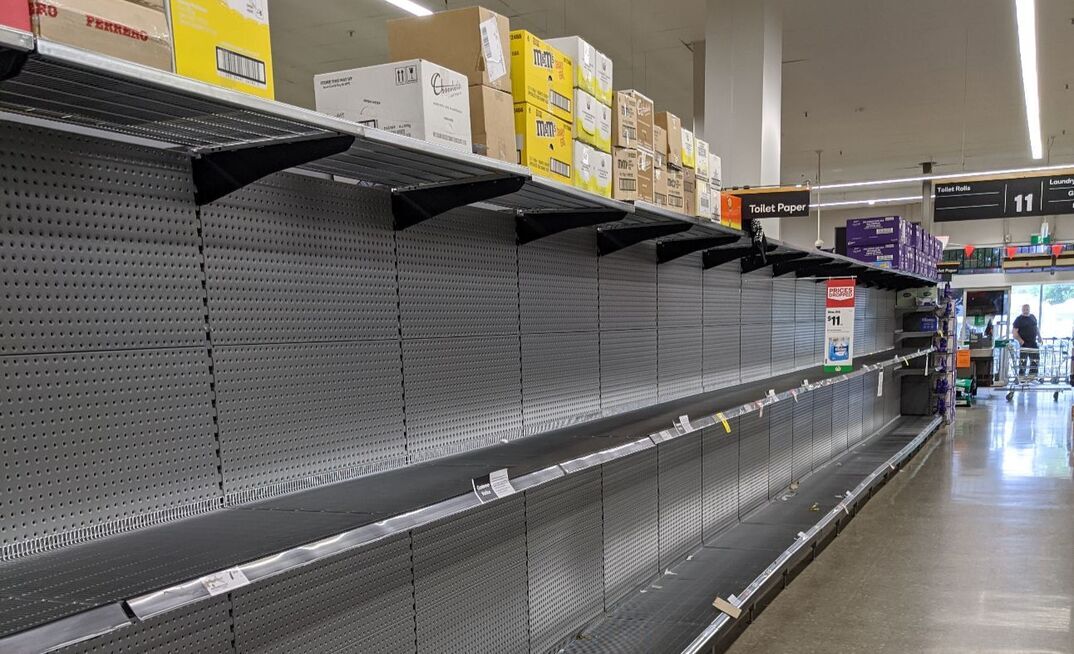
Shelves at our local supermarket had been stripped bare as people from the city descended on country towns, after COVID-19 prompted panic buying across the country.
My lactose-intolerant son was just over a year old at the time, and heavily reliant on the milk, which I had always ordered well ahead of time. But it had not come.
I remember wondering – were other people being deeply inconsiderate of their fellow human beings? Or was I naïve?
YOU MIGHT ALSO LIKE
My friend arrived as I pondered, throwing me a roll of toilet paper along with the milk – just in case we'd run out of that too. The next day, the local butcher called to say he'd tracked down a dozen cartons of the long-life and would keep them hidden until I could get into town.
I had never been so grateful to live in a country town, where good friends and neighbours, and decent people in general, will always have your back.
But, as I sit here now, with less than a quarter of fuel in the tank of my car outside, I wonder if I learned anything from COVID. And far more importantly, did the Government?
AUSTRALIANS PROVEN TO PANIC
The Prime Minister has insisted on multiple occasions that panic buying is "unAustralian" – when in fact it is proven to be a very Australian thing to do.
During the COVID-19 pandemic, researchers at UNSW Sydney's Business School studied panic buying at scale.
Senior lecturer at the University's School of Economics, Dr Timothy Neal, and research co-author, professor Michael Keane, analysed Google search data across 54 countries, tracking spikes in searches for terms such as "toilet paper", "panic buying" and "supermarket near me".
The research found significant differences between countries, and Australia stood out for both the speed and intensity of its response.
Dr Neal said the sensitivity was likely linked to how closely Australians monitor global events and understand their local impact.
"We're a highly globalised country, and people understand that what happens elsewhere in the world can affect us here," he said.
"We rely on diesel and petrol that comes from Asia, and Asia relies on crude oil shipments from the Middle East.
"So, there's a clear link between what's happening in the Persian Gulf and what we expect to happen at petrol stations in Australia."
Predictably, the biggest motivations behind panic buying are supply and price.
In the case of fuel, Dr Neal said price was an especially powerful motivator because price changes are immediate and highly visible.
He said all that was needed for panic buying to be "rational" was the belief that others would panic. And in the end, the panic buying only deepens the very situation people are attempting to avoid.
"I think our experience with COVID has primed us to be especially sensitive to panic buying in the future," Dr Neal says.
"That does not mean every fear of shortage is unfounded. Fuel is part of a global supply chain, and prolonged instability can flow through to transport, freight and the price of everyday goods."
A MAJOR POLITICAL PROBLEM
Other researchers have suggested Australians may be having flashbacks to COVID, and that the current fuel problem has the potential to become a major issue for the Government.
Head of politics and international relations at Monash University's School of Social Sciences, Zareh Ghazarian, said while the Government insists fuel reduction measures are not yet necessary, Australians may already be thinking back to how COVID impacted their ability to move around freely.
"Moreover, with inflation already a challenge for the government, increasing fuel prices will add to the cost of living pressures and potentially impact the economy," Ghazarian said.
He said the challenge of fuel security may also help galvanise the Coalition, which "has been seemingly uncertain about its policy settings."
"It will give the new Liberal and National Party leaders a strong point to focus their attacks on the government and appear more competitive in the policy debate than in recent months," Ghazarian said.
WHERE IS THE PLAN?
The conflict in Iran was out of the Government's control, but the reality is fuel security did not become an issue overnight. And while there is a lot of finger-pointing, as has been the case with the housing crisis, fuel security has been largely ignored for many years, by many leaders, across both major parties.
Aside from arguments surrounding local refining and fuel storage, given how utterly predictable Australians have proven themselves to be in a crisis – why wasn't human behaviour factored into the equation?
How can the energy minister keep saying it takes time for supply to return to normal when demand doubles within a matter of days, without explaining why the threat of panic buying wasn't accounted for when setting minimum fuel stocks? And why wasn't there a plan for how fuel would be fairly and sensibly distributed in such an event?
Perhaps Dr Neal was right about people understanding that what happens elsewhere in the world can affect us here. But I'm not sure most people understand what impact their fuel hoarding will ultimately have on the prices they pay at the checkout. The consequences could be particularly long-lasting if farms fold as a result.
It's one thing to come through for a friend when it comes to milk and toilet paper. But flicking a neighbour 20,000 litres of diesel or more when you're struggling to secure fuel supply for yourself is an entirely different matter. And that is not a situation farmers should ever have to face.