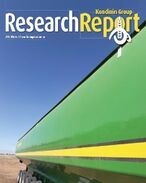


With sowing in many parts of the country well and truly under way, and in some cases done and dusted, the research team has been busy looking at tow-behind or tow-between commodity carts in Western Australia, New South Wales and Victoria.
Capacities continue to increase with 20,000-30,000 litres or more now commonplace – a trend which has seen the likes of John Deere needing to up its game with the 2018 release of the C850 carts which can handle 30,000 litres.
Improvements in design also continue and the past couple of years has seen an emphasis on walkways, platforms, rails and access as well as drive mechanisms which appear to favour hydraulic or electric systems. Of the dozen commodity carts inspected, it was pleasing to see the improvements to ladders and access which is an important part of safety on farm.
This has also extended to the use of automatic bin lid opening and closing, remote control augers and conveyors, internal bin sensors and fill height warning lights, which all aim to keep people from actually being on the cart at all.
Ease of calibration of the carts has also improved in line with the development of hydraulic and electric drive systems and while there is usually no back up if these systems fail, it is rare to hear of major issues with hydraulics or electrics for metering control.
Manufacturers such as Seed Hawk have even now moved to being able to control most of the cart’s functions though an iPad.
But for the diehards, ground drive is still an option on several key brands such as Simplicity.
In general, calibration is run through the cart’s controller or terminal in the tractor cabin and it’s also more readily available on the cart itself. Most manufacturers will supply the cart with scales and a made-to-fit bag or tray.
It’s recommended to do two or three calibration samples per bin to make sure the delivery rate will be accurate.
From the carts inspected, most were within 1-1.5% accurate to the calibration.
To access the full report click HERE to become a member.